Norweco Singulair Green and the Future of Green Wastewater Solutions
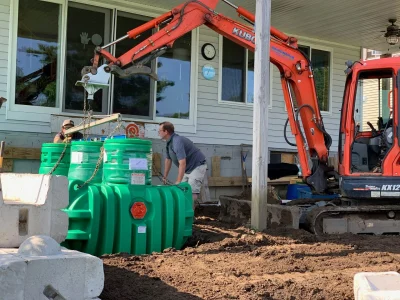
Wastewater treatment rarely gets much attention until something goes wrong. A soggy drain field, an odor near the tank, recurring service calls, or a failed inspection can turn an invisible utility into a household emergency. For homeowners, builders, and property managers working outside the reach of municipal sewer lines, the choice of onsite treatment system has long-term consequences that reach well beyond plumbing. It affects land use, maintenance costs, environmental risk, and even whether a project can move forward on a difficult site.
That is where systems like the norweco singulair green have earned serious interest. Not because they make glamorous promises, but because they speak directly to the practical challenge of treating household wastewater to a high standard in places where conventional septic setups are not always enough. In the field, that distinction matters. There is a real difference between a basic tank that settles solids and a treatment system designed to reduce organic load more aggressively before water reaches final dispersal.
The broader story is bigger than one product line. Green wastewater solutions are moving from niche to necessity. Regulations are tightening in sensitive watersheds. Lot sizes are shrinking in some markets. Homeowners want systems that are less disruptive to landscapes and more dependable over time. Engineers are under pressure to design systems that work not just on paper, but through wet seasons, power interruptions, occupancy swings, and years of real use. Looking at the norweco singulair green offers a useful lens into where the industry is headed.
Why advanced onsite treatment is gaining ground
A conventional septic system can still be the right answer on the right site. If the soil is suitable, groundwater is deep enough, setbacks are manageable, and water use is predictable, gravity systems remain simple and cost-effective. There is a reason they have lasted for generations. They have few moving parts and, when properly designed and maintained, can perform well.
The trouble starts when one or more of those conditions is missing. Clay-heavy soils infiltrate poorly. High water tables reduce treatment capacity in the soil. Lots near lakes, streams, and estuaries face stricter nutrient and pathogen concerns. Vacation properties create feast-or-famine loading patterns. Large homes can generate substantial daily flows even when occupancy seems modest. In these cases, a conventional tank by itself does not always provide enough treatment before dispersal.
Advanced treatment units entered the market to solve these site constraints. They treat wastewater biologically in a more controlled way, often using aeration to support microbial activity that breaks down organics more thoroughly than norweco singulair green passive settling alone. That usually means cleaner effluent entering the next stage of the system, which can reduce stress on the drain field and help protect surrounding soils and water resources.
What has changed in recent years is not simply the technology, but the expectation around performance. Local health departments and environmental agencies increasingly look for systems that can demonstrate consistent treatment under a range of operating conditions. Homeowners, too, are better informed than they once were. Many have seen the cost of replacing a failed field, which can run into the tens of thousands of dollars depending on excavation needs, imported media, and site restoration. Spending more upfront for better treatment can feel less like an upgrade and more like insurance.
What the Norweco Singulair Green represents
The norweco singulair green sits in the category of advanced residential wastewater treatment systems designed to produce a higher quality effluent than a basic septic tank. At a practical level, that means it is built around managed biological treatment rather than simple storage and separation. The system is often considered where site conditions, permitting requirements, or homeowner goals call for more than conventional septic performance.
What distinguishes systems in this class is not a single miracle component. It is the way they combine aeration, clarification, and solids management into a compact treatment train. Good design in this segment aims for three things at once: stable biological activity, manageable maintenance, and reliable effluent quality. Those goals sound simple, but field performance depends on dozens of details, from blower durability to sludge return behavior to how well the system handles temporary overloads.
In practice, buyers are often attracted to the norweco singulair green for one of two reasons. Either they need an advanced solution to gain approval on a challenging property, or they want an environmentally stronger option than a standard tank-and-field arrangement. Those are not always the same customer. The first is driven by necessity, the second by values. Yet both groups usually end up asking similar questions. How clean is the discharge likely to be? What does service really involve? How noisy is the aeration equipment? How sensitive is the unit to bleach, antibacterial soaps, and long vacant periods? Those are the right questions.
A system can look excellent in a brochure and still disappoint if the owner is not prepared for regular inspection and service. Advanced units ask more of the operator than a passive tank does. That is not a flaw. It is simply the reality of any equipment that actively treats wastewater. The payoff is higher performance, but performance comes with responsibility.
The environmental case for greener wastewater treatment
The phrase “green wastewater solution” gets used loosely, sometimes too loosely. In this context, it should mean something concrete. A greener system reduces pollutant loads to the surrounding environment, makes efficient use of the available site, and helps preserve the long-term function of soil dispersal components. If it also reduces excavation footprint or allows redevelopment without major land disturbance, that is a meaningful added benefit.
For many properties, the environmental value starts with biochemical oxygen demand and total suspended solids. Lower levels of each generally mean the effluent is less likely to clog downstream soil interfaces quickly. Cleaner effluent also improves the effectiveness of secondary dispersal methods such as drip irrigation fields, low-pressure distribution, or shallow narrow trenches, depending on local approvals and design standards.
Nutrient management is a more nuanced topic. Not every advanced residential treatment unit is designed primarily for nitrogen or phosphorus removal, and buyers should be careful not to assume that “advanced” automatically means full nutrient control. In nutrient-sensitive watersheds, additional treatment stages may still be required. That said, stronger primary biological treatment often supports better overall system performance and can be part of a larger nutrient reduction strategy.
I have seen the difference cleaner effluent can make on marginal sites. On one small waterfront-adjacent parcel, the conversation began with the assumption that nothing short of an expensive engineered mound would pass review. Once the design team evaluated advanced pretreatment options and matched them to a suitable dispersal approach, the project became far more feasible. It was not cheap, and it still required careful maintenance planning, but it preserved the buildable use of the lot without taking unnecessary risks with nearby water quality. That is what “green” should mean in real life, not vague branding.
Where systems like this fit best
Not every property needs the norweco singulair green, but there are clear scenarios where a system in this class earns its keep.
- Lots with limiting soils, high seasonal groundwater, or tight setbacks
- Homes near lakes, coastal zones, streams, or other sensitive receiving environments
- Replacement projects where an aging septic system has already stressed the existing drain field
- New construction on compact parcels where efficient land use matters
- Owners who are willing to commit to routine service in exchange for higher treatment performance
That final point is worth stressing. The best advanced treatment unit is still a bad choice for an owner who expects to ignore it for ten years. A system that depends on aeration, internal recirculation, and periodic inspection should be paired with a realistic maintenance plan from day one. Some installers explain this well. Others gloss over it in the sales process and leave the homeowner to discover the details later. That is a mistake that often leads to frustration.
The trade-offs homeowners should understand
It is easy to focus on effluent quality and overlook the practical side. Yet most owners live with practical side effects, not laboratory metrics. A greener wastewater system is still a piece of utility infrastructure, and utility infrastructure is judged by reliability, serviceability, and cost over time.
The first trade-off is upfront price. Advanced treatment units generally cost more than a simple septic tank system. The exact difference varies widely by region, permitting requirements, excavation conditions, and final dispersal method, but the delta can be several thousand dollars and sometimes much more. If the comparison includes a difficult site where a conventional system would require major imported fill or a large engineered mound, the price gap may narrow. That is why blanket statements about “too expensive” or “worth every penny” are not especially helpful. The right answer depends on the site.
The second trade-off is dependence on mechanical components. Aeration systems commonly rely on blowers, controls, and internal components that need inspection and occasional replacement. None of this is exotic, but it does move the owner from a passive system model into an equipment management model. In many areas that also means a service contract is either required or strongly advised.
The third trade-off is operational sensitivity. Household habits matter. Flushing wipes, grease, solvents, excessive disinfectants, or large slug loads can interfere with treatment performance. Conventional septic systems suffer from poor habits too, but active treatment units tend to make those consequences visible sooner. Owners who understand the system and use it responsibly often have good experiences. Owners who treat it like a trash can usually do not.
The fourth trade-off is power reliance. If the system uses continuous or intermittent aeration, electrical service becomes part of the equation. Short outages are one thing. Extended outages, especially during high occupancy periods, can affect treatment conditions. In storm-prone regions, backup power planning deserves discussion, particularly for homes that also rely on pumps for water supply or pressure distribution.
Maintenance is not an afterthought
One of the strongest predictors of long-term satisfaction with any advanced treatment unit is the quality of the service network behind it. That includes the installer, local dealer or service provider, and the clarity of the owner education provided at startup. A well-designed system can still become a headache if replacement parts are slow to obtain or no one nearby is trained to service it properly.
Routine service commonly involves inspection of the aeration components, checking sludge and scum levels, verifying recirculation or flow paths, and making sure alarms or controls are functioning correctly. Solids pumping still matters. Biological treatment does not make sludge vanish. It simply manages wastewater more effectively between pump-outs and before discharge to the final dispersal area.
Homeowners are often surprised that good maintenance can actually preserve the value proposition of the system. When advanced pretreatment performs as intended, the downstream field or dispersal zone is under less stress. That can support longer service life and fewer hydraulic failures. In other words, maintenance is not just about protecting the treatment unit itself. It is about protecting everything that comes after it, which is usually the most expensive part to repair.
A practical service mindset usually includes a few simple owner habits:
- Keep accurate records of service visits, pump-outs, and alarm events
- Use water efficiently, especially during gatherings or peak occupancy periods
- Avoid flushing wipes, grease, medications, and harsh chemicals
- Know where the system components are located before landscaping or paving
- Call for service early if odors, alarms, or slow drainage appear
None of those steps are difficult, but they matter. I have seen owners spend real money troubleshooting symptoms that traced back to basic misuse, such as months of “flushable” wipes accumulation or an irrigation contractor driving heavy equipment over a component area that should have remained protected.
The role of regulation and site design
The future of green wastewater solutions will be shaped as much by regulation and design practice as by hardware. Treatment technology can only do so much if it is paired with a poor site plan or unrealistic loading assumptions. The industry is gradually moving toward more integrated design, where pretreatment, dispersal, reserve area, hydraulics, topography, and long-term service are considered as one system instead of separate checkboxes.
That is a healthy shift. Many failures blamed on equipment are actually design mismatches. A treatment unit might perform well, but the dispersal area could be undersized. Or a property with highly variable occupancy may need flow equalization considerations that were ignored during planning. In coastal areas, future groundwater movement and sea level effects can complicate designs that look acceptable under current conditions. In cold climates, insulation and frost depth considerations affect how consistently systems operate through winter.
The most capable designers ask unglamorous questions early. Who will occupy the home full time? Is there a finished basement likely to become a rental suite later? Will the owner maintain a service contract? Is there room for a reserve area if regulations require one? Are there seasonal saturation patterns that do not show up on a dry-day site visit? These questions often determine whether a project succeeds quietly for twenty years or begins accumulating problems within five.
How this technology fits the future of housing and land use
Smaller lots, infill development, and rural homebuilding pressure are all changing the conversation around onsite wastewater. In many markets, easily serviced “perfect septic lots” are not the ones being developed anymore. Builders and buyers are trying to make use of parcels with tighter constraints, and local authorities need treatment solutions that support development without creating long-term environmental liabilities.
That is where the norweco singulair green and similar systems fit a broader trend. They allow onsite wastewater treatment to become more precise and more adaptable. Instead of relying almost entirely on soil for treatment, they improve the effluent before the soil takes over. That can open opportunities for sites that otherwise would be marginal or impossible under conventional methods alone.
There is also a renovation angle that deserves more attention. Large numbers of older homes still operate on aging septic systems installed under less demanding standards. As those homes are expanded, sold, or converted to year-round use, advanced treatment often becomes part of the compliance path. This is one of the least flashy but most important fronts in environmental protection. Upgrading legacy systems near water bodies may do more for local water quality than many public campaigns because it addresses actual pollutant sources one property at a time.
What buyers and specifiers should ask before choosing one
When evaluating the norweco singulair green or any comparable advanced treatment system, the most useful approach is not to chase the broadest marketing claim. It is to match the system to the site, the users, and the service ecosystem.
Ask how the system is expected to perform under the property’s projected daily flow, not just the bedroom count. Ask what maintenance intervals are typical in your area and who performs them. Ask how the unit handles intermittent occupancy if the property is seasonal. Ask what happens during power loss and whether alarms are audible, remote-monitored, or both. Ask for realistic operating costs, including electricity, service visits, and pump-outs over a five- to ten-year window.
Also ask the installer what they see go wrong most often. Experienced professionals usually have honest answers. They might mention misuse, skipped maintenance, landscaping damage, poor grading, or simple neglect. That kind of candor is valuable. It tells you whether you are dealing with someone who has actually supported systems in the field rather than merely sold them.
One of the better conversations I have witnessed on this subject happened when a homeowner asked a designer a blunt question: “If this were your house, would you choose this system?” The designer paused, looked at the lot constraints, and said yes, with one condition: that the owner commit to ongoing service the same way they would for a boiler or a generator. That answer was probably more helpful than a hundred pages of polished literature.
A more mature view of “green”
There is a tendency in building and infrastructure markets to label anything more advanced as sustainable by default. Wastewater does not reward that kind of loose thinking. A truly green solution is one that performs reliably, protects water resources, fits the site with minimal unnecessary disturbance, and can be maintained over its full service life. Reliability is part of sustainability. So is owner education. So is access to parts and technicians.
By that standard, the promise of the norweco singulair green is not that it somehow eliminates the burdens of onsite wastewater. It is that it offers a more controlled treatment path for properties where conventional septic approaches may be inadequate or environmentally weaker. That is a meaningful contribution, especially in regions where development pressure and water quality concerns collide.
The future of green wastewater solutions will likely involve smarter monitoring, stronger nutrient reduction in sensitive areas, tighter integration with low-impact site design, and more accountability for long-term maintenance. Yet even as the tools improve, the fundamentals will remain familiar. Good wastewater treatment depends on realistic design, sound installation, disciplined maintenance, and users who understand the system they own.
That may not be glamorous, but it is how real infrastructure works. And for homeowners trying to protect both their property and the landscape around it, that kind of grounded performance is exactly what matters.
Excavating New Jersey LLC
406 County Rd 565, Wantage, NJ 07461, United States
+1 973-791-4284
FAQ About norweco singulair green
How much does a NORWECO septic system cost?
The installed cost depends on the selected unit, engineering, site access, excavation, electrical work, disposal-field design and required approvals. A tank-only price is not a complete installation quote. Ask Excavating New Jersey LLC for a site-specific, itemized estimate that also explains ongoing service costs.
How does a Norweco septic system work?
The Singulair Green uses pretreatment, aeration, clarification and filtration to treat domestic wastewater. In the aeration chamber, oxygen supports bacteria that break down organic material. The Bio-Kinetic unit provides further filtration and flow equalization. Final effluent disposal must follow the property's approved design and applicable requirements.
What is the average lifespan of a septic system?
There is no guaranteed lifespan for every system. Design, installation, soil conditions, wastewater loading and regular maintenance all matter, and mechanical parts may need replacement before the tank. For a Singulair Green system, follow the manufacturer's service schedule and have a qualified provider assess its condition and pumping needs.